
In recent years, vision boards have become a popular tool in personal development and manifestation communities. You may have seen people creating boards filled with pictures of dream homes, career achievements, travel destinations, or words like “success,” “growth,” and “abundance.”
But the real question is: do vision boards actually work?
The answer is not about magic or wishful thinking. Vision boards work because they influence focus, motivation, and behavior, which are key factors in achieving goals.
Let’s explore how vision boards work from a psychological and practical perspective.
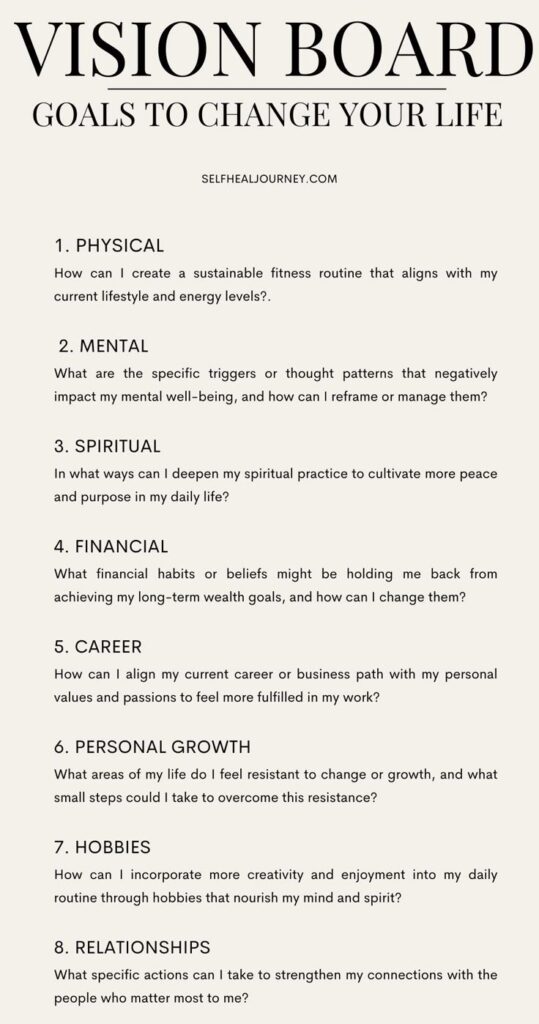
What Is a Vision Board?
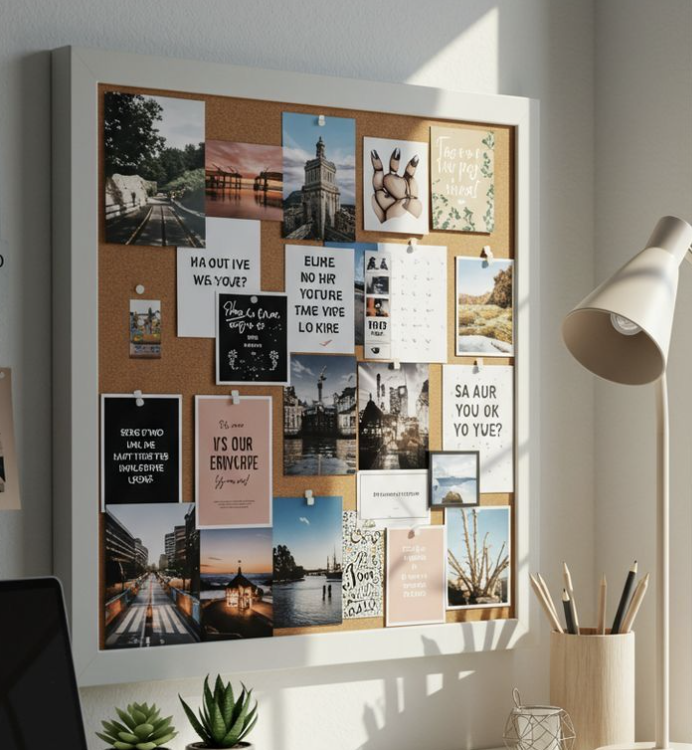
A vision board is a visual representation of your goals, dreams, and intentions. It typically includes images, quotes, affirmations, and symbols that represent what you want to achieve in your life.
These boards can be physical (created using magazines, photos, and paper) or digital (made on apps or design platforms).
The purpose of a vision board is simple: to remind you daily of what you want to achieve.
When your goals are visible, they stay present in your mind.
The Psychology Behind Vision Boards
Vision boards are effective because they activate certain psychological mechanisms that influence behavior and motivation.
1. Visualization Strengthens Motivation
Visualization is a technique widely used by athletes, entrepreneurs, and performers. By imagining success repeatedly, the brain becomes more comfortable with the idea of achieving it.
When you see images of your goals regularly, your brain starts to treat them as realistic possibilities rather than distant dreams.
For example, an athlete visualizing a winning performance can improve confidence and readiness. Similarly, seeing your goals daily can strengthen your belief in achieving them.
Visualization works as a mental rehearsal, preparing the mind for action.
2. Vision Boards Activate the Brain’s Focus System
The brain has a filtering system called the Reticular Activating System (RAS). This system determines what information your brain notices and prioritizes.
When you focus on specific goals, the RAS begins to filter information related to those goals.
For example, if you place images related to a career or academic success on your vision board, your mind becomes more attentive to opportunities, ideas, and actions related to those goals.
This is why people often feel that opportunities appear more frequently once they start focusing on a specific ambition.
3. They Create Emotional Connection with Goals
Goals written as plain text may feel distant or abstract. However, images and symbols create stronger emotional responses.
Seeing a visual representation of your dreams makes them feel more personal and meaningful.
Emotion plays a crucial role in motivation. When you feel emotionally connected to a goal, you are more likely to take consistent steps toward achieving it.
4. Vision Boards Encourage Clarity
Many people struggle to achieve goals because they lack clarity. They may want success, happiness, or growth but cannot define what those concepts mean for them.
Creating a vision board requires you to think deeply about what you truly want.
You ask yourself questions like:
- What kind of career do I want?
- What lifestyle do I imagine?
- What habits do I want to develop?
This process itself brings clarity and direction.
Vision Boards and Goal-Setting Theory
Vision boards also align with goal-setting theory, which suggests that clear and specific goals increase performance.
When goals are defined visually and revisited frequently, they remain active in your mind. This increases the likelihood of consistent effort.
In simple terms, when your goals are visible every day, you are less likely to forget them.
How to Create an Effective Vision Board
If you want a vision board to be meaningful, it should reflect genuine aspirations rather than random images.
1. Define Your Goals Clearly
Start by identifying the areas of life you want to focus on, such as career, education, health, relationships, or personal growth.
Clarity ensures that your board represents realistic intentions rather than vague desires.
2. Choose Visual Representations
Select images, words, and symbols that represent your goals. These visuals should inspire you and reflect the life you want to build.
3. Place It Somewhere Visible
Your vision board should be placed where you can see it regularly, such as near your study desk or workspace.
The purpose is to remind you daily of your goals.
4. Combine Visualization with Action
A vision board is not a substitute for effort. It works best when paired with consistent action.
For example, if your board represents academic success, you still need to study regularly and manage your time effectively.
The board serves as a motivational reminder rather than a replacement for discipline.
Common Misconceptions About Vision Boards
One common misunderstanding is that vision boards automatically bring success without effort.
In reality, vision boards help you maintain focus and motivation, but progress still requires consistent action.
They are tools for clarity and inspiration, not shortcuts to achievement.
Why Vision Boards Work for Many People
Vision boards can be effective because they combine three important elements:
- Clarity – defining what you want
- Visualization – mentally rehearsing success
- Motivation – reminding yourself of your goals daily
When these elements work together, they create a strong psychological foundation for goal pursuit.